

5 Things to Know About Why “Doing Everything Right” Still Isn’t Enough
When effort doesn’t lead to healing, it’s rarely because you’re doing something wrong—it’s usually because the body needs something different.

Sometimes the most healing thing you can do is stop pushing.
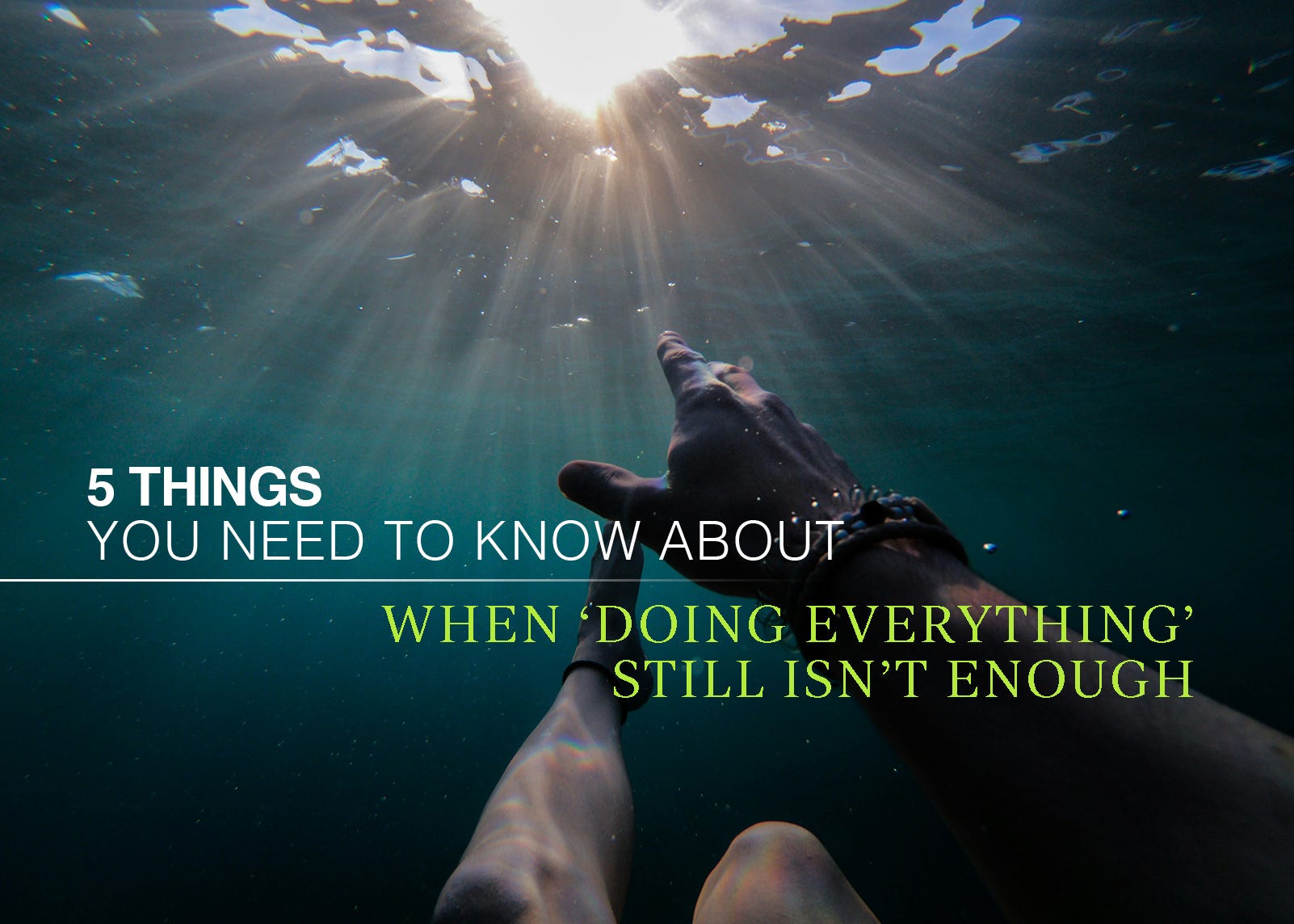
Many of the people who feel the most frustrated with their health are also the ones trying the hardest.
They follow the guidance. They eat well. They take the supplements. They prioritize movement, hydration, sleep. From the outside, it looks disciplined—almost impressive. And yet, inside, something still feels off.
The body doesn’t respond the way it’s supposed to. Energy doesn’t return. Symptoms shift, but never fully resolve. There’s a quiet, persistent sense of Why isn’t this working for me?
This experience is far more common than most people realize.
And it’s not a failure of willpower, intelligence, or commitment. It’s usually a misunderstanding of what the body actually needs in order to heal.
1. Effort is not the same thing as capacity
A belief that sounds reasonable—but often keeps people stuck—is that healing is a direct reward for effort.
But the body doesn’t heal because you tried harder. It heals when it has enough capacity.
Capacity includes energy, nutrients, safety, rest, and margin. When those are depleted, even the “right” inputs can feel like too much.
This is why doing more sometimes leads to feeling worse—not because the approach is wrong, but because the system is already overloaded.
2. The body prioritizes survival over optimization
The body is not focused on peak performance. It’s focused on staying alive.
When resources are limited, the body allocates them to what matters most: keeping blood sugar stable, maintaining circulation, regulating temperature, managing immediate stress.
Long-term repair—digestion, hormones, immunity, tissue healing—gets postponed.
So you may be “doing everything right,” but if the body still perceives stress or scarcity, it won’t shift into repair mode yet.
3. Deficiency and overload often coexist
This is one of the most misunderstood dynamics in healing.
A person can be depleted and overwhelmed at the same time.
Under-nourished, yet inflamed
Exhausted, yet overstimulated
Rest-deprived, yet constantly pushing
Adding more—more supplements, more protocols, more discipline—can increase the overload without resolving the deficiency.
A gentle self-check (no judgment): - I feel better after rest, not activity - I crash after meals or stress - My sleep doesn’t feel restorative - My stress tolerance is low - I rely on stimulation to function
If several of these resonate, the issue may not be effort—it may be capacity.
4. Healing doesn’t respond well to pressure
Pressure—even self-imposed pressure—keeps the nervous system alert.
And a body that feels constantly monitored, judged, or pushed rarely shifts into healing.
This doesn’t mean structure or intention are bad. It means healing requires safety as much as strategy.
When pressure softens, the body often begins to respond in ways that effort alone never produced.
5. Progress often starts when expectations loosen
For many people, healing doesn’t begin when they find the perfect protocol.
It begins when they stop demanding immediate results.
Early signs of progress are subtle: fewer crashes, more resilience, slightly better mornings. These changes are easy to overlook, but they signal that the system is finally reorganizing itself.
Stability comes before transformation.
Why This Matters
When people believe healing is a matter of trying harder, they often turn frustration inward. They assume something is wrong with them—that they’re missing a step or failing their body.
In reality, the body is almost always responding intelligently to its circumstances.
Understanding this reframes the question from What am I doing wrong? to What does my body need more of—or less of—right now?
A Gentle Reminder
You are allowed to stop proving how committed you are to healing.
You’re allowed to rest without earning it, to soften your expectations, and to let go of the idea that your body is resisting you on purpose.
Healing responds far more to kindness than to pressure.
Meeting yourself with patience isn’t giving up—it’s often the moment the body finally feels safe enough to change.
Join the Conversation
Which part of this felt most familiar?
Have you noticed times when doing less actually helped more?